
Crop Monitoring Features in Modern Agriculture Drones
Crop Monitoring Features are transforming modern agriculture by reducing dependency on manual inspection and experience alone. Today, technology plays a crucial role in improving crop yield, minimizing losses, and optimizing farm resources. One of the most impactful advancements in this shift is the use of agriculture drones equipped with advanced crop monitoring capabilities.
These drones help farmers, agribusinesses, and agricultural professionals monitor crop health, identify stress areas early, and make informed decisions at the right time. This article explains how agriculture drones with crop monitoring accessories work, why they matter, and how to choose the right solution for your farming needs.
For information related to commercial drone usage, licensing, and compliance, you can refer to the official rules and regulations governing drone operations.
Check Current Prices of Agriculture Drones in India.
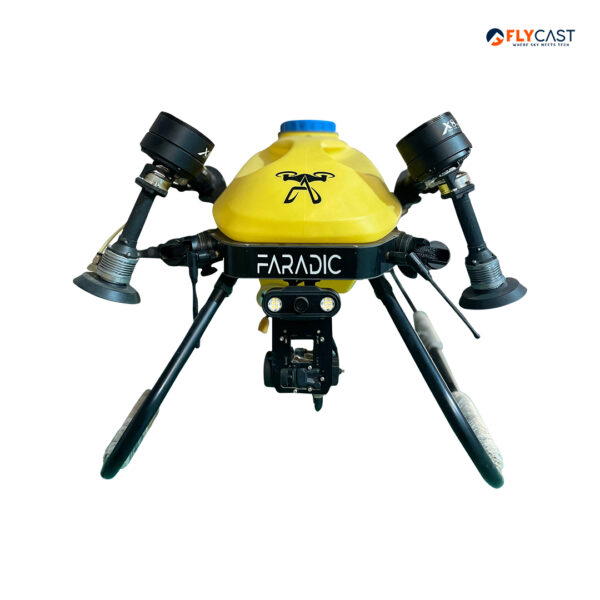
What Are Crop Monitoring Features in Agriculture Drones?
Crop Monitoring accessories are advanced capabilities built into agriculture drones that allow users to analyze crops from an aerial perspective. Instead of walking through large fields and relying on guesswork, farmers can now access accurate data covering the entire farm.
Common Crop Monitoring accessories include:
- High-resolution RGB imaging
- Multispectral and vegetation analysis
- NDVI-based crop health assessment
- Early stress and disease identification
- Crop growth and canopy monitoring
These features transform raw images into actionable insights that support better farm management. Here are more instruction for commercial drone by DGCA. For more information read.
Why Crop Monitoring Features Are Important for Farmers
The biggest advantage of Crop Monitoring accessories is early detection. Many crop issues begin long before they become visible to the naked eye. Drones can identify these changes early, allowing timely intervention.
Key benefits include:
- Early detection of pest and disease stress
- Better irrigation and water management
- Improved fertilizer planning
- Reduced input costs
- Higher yield consistency
For medium and large farms, Crop Monitoring Features also save time and labor while improving accuracy.
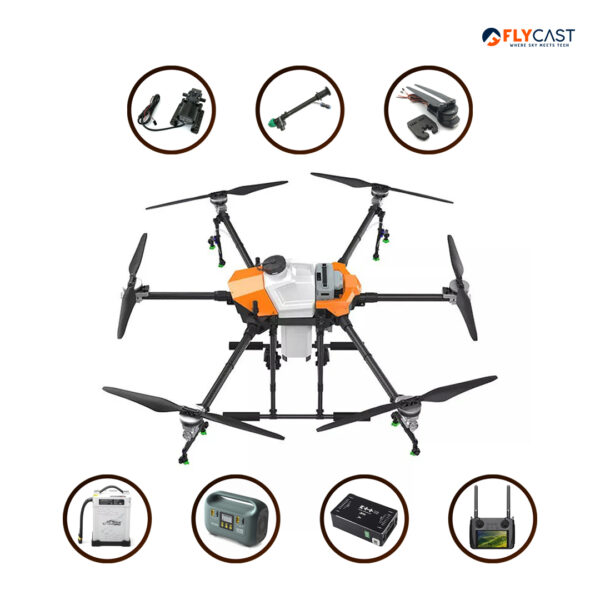
How Agriculture Drones Use Crop Monitoring Features
Agriculture drones fly over fields using automated flight paths and capture data through onboard sensors. This data is processed to generate crop health maps and vegetation indices.
Practical applications include:
- Identifying uneven crop growth
- Detecting nutrient deficiency zones
- Monitoring irrigation coverage
- Assessing crop damage after weather events
- Supporting precision spraying decisions
By using Crop Monitoring accessories regularly, farmers can track crop performance throughout the growing season.
Agriculture Drones with Crop Monitoring Features Offered by Flycast
We provide agriculture drones designed specifically for Indian farming conditions, focusing on reliability, accuracy, and ease of use. Each drone integrates essential Crop Monitoring accessories to support precision agriculture.
You can explore our solutions here:
- Agriculture Crop Monitoring Drone – Pro Series
- Multispectral Mapping Drone for Farming
- Precision Agriculture Survey Drone
- Long-Range Farm Monitoring UAV
Each model is suitable for different farm sizes and monitoring requirements.
Key Crop Monitoring Features Available in Our Drones
1. Multispectral Crop Analysis
Multispectral sensors capture data beyond visible light, helping assess plant health more accurately.
2. NDVI-Based Vegetation Mapping
NDVI maps highlight healthy and stressed crop areas, enabling targeted action.
3. High-Resolution Field Imaging
Clear aerial imagery helps identify gaps, weeds, and uneven growth patterns.
4. Large Area Coverage
Efficient flight planning allows monitoring of large farms in minimal time.
5. Data-Ready Outputs
Collected data can be used for reports, planning, and long-term crop analysis.
These Crop Monitoring Features are essential for precision-driven farming.
Use Cases of Crop Monitoring Features in Agriculture
Crop Monitoring Features are used across different farming stages:
- Pre-sowing field assessment
- Mid-season crop health monitoring
- Pest and disease detection
- Irrigation efficiency checks
- Yield estimation before harvest
Farmers and agribusinesses rely on these insights to make faster and more confident decisions.
Comparison Table: Farm Monitoring Capabilities
| Feature | Benefit to Farmers |
|---|---|
| Multispectral Imaging | Detects crop stress early |
| NDVI Mapping | Improves crop health analysis |
| High-Resolution Camera | Identifies growth inconsistencies |
| Large Area Coverage | Saves time on big farms |
| Data Reports | Supports long-term planning |
How to Choose the Right Agriculture Drone
When selecting a drone with Crop Monitoring Features, consider:
- Size of your farm
- Type of crops grown
- Frequency of monitoring
- Data accuracy requirements
- Availability of training and support
Choosing the right drone ensures better returns on investment and smoother adoption.
Future of Crop Monitoring Features in Agriculture
Crop Monitoring Features continue to evolve with improvements in sensors, automation, and analytics. In the coming years, farmers will rely even more on drone data for predictive insights and precision planning.
Adopting these technologies early helps farms stay competitive and resilient.
Frequently Asked Questions (FAQs)
What are Crop Monitoring Features in drones?
They are tools like multispectral imaging and NDVI used to assess crop health.
Can crop monitoring drones detect diseases early?
Yes, they can detect stress before symptoms are visible.
Are crop monitoring drones suitable for Indian farms?
Yes, many drones are designed specifically for Indian conditions.
Do I need technical skills to use these drones?
Basic training is usually sufficient.
What sensors are used for crop monitoring?
RGB, multispectral, and sometimes thermal sensors.
How often should crop monitoring be done?
Weekly or bi-weekly during critical growth stages.
Are these drones expensive?
Costs vary based on features and capabilities.
Can crop monitoring drones improve yield?
Yes, by enabling timely interventions.
Is NDVI necessary for crop monitoring?
NDVI is highly effective but not mandatory for all crops.
Do these drones support large farms?
Yes, many models are designed for large-area coverage.