


Mini VTOL drones are redefining how unmanned aerial systems are deployed across defense, industrial inspection, mapping, and logistics missions. By combining vertical lift with fixed-wing efficiency, these platforms address limitations seen in traditional multirotor and runway-dependent UAVs. This guide is written to help professionals understand the category in depth and make informed decisions when planning to buy mini VTOL drone systems for operational use. Check out the best fighter VTOL drone in India.
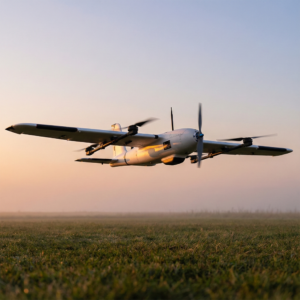
A Mini VTOL UAV is a compact unmanned aircraft capable of vertical takeoff and landing while transitioning to fixed-wing flight for extended range and endurance. Unlike pure multirotor platforms, these systems leverage aerodynamic lift during cruise, resulting in higher efficiency and broader operational envelopes.
The defining advantage lies in their hybrid design. Vertical lift motors enable deployment from confined or unprepared areas, while a fixed wing supports long-distance flight. This makes mini VTOL platforms especially valuable in environments where infrastructure is limited but mission coverage is large. Check out AYK 350 PRO Heavy Load VTOL – Cargo Delivery Drone by Flycast.
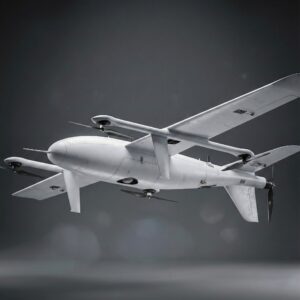
A hybrid VTOL drone typically uses multiple lift rotors for takeoff and landing, paired with a pusher or tractor propeller for forward flight. Once airborne, the lift motors disengage or idle, and the aircraft transitions smoothly into wing-borne flight.
This architecture allows operators to deploy a Mini VTOL UAV with vertical takeoff and landing from rooftops, vehicles, or rugged terrain without sacrificing range.
Fixed-wing VTOL aircraft deliver significantly longer flight times than multirotor drones of similar size. For mapping, surveillance, or corridor inspection, this translates into fewer launches, reduced battery swaps, and improved data consistency. How to take care of VTOL mini drone.
Mini VTOL drones are adopted across sectors where flexibility and efficiency are critical:
Defense and Border Surveillance: Silent launch, long endurance, and wide-area coverage
Mapping and Surveying: Linear asset inspection, terrain modeling, and large-area photogrammetry
Industrial Inspection: Pipelines, power lines, railways, and highways
Disaster Response: Rapid deployment without runway dependency
Environmental Monitoring: Forests, coastlines, and wildlife reserves
Organizations looking to buy mini VTOL drone platforms often prioritize these use cases due to the balance between portability and performance.
When evaluating a vertical takeoff and landing drone in the mini VTOL category, several technical parameters should be assessed objectively.
Compared to multirotors, Mini VTOL UAVs typically offer multiple times the flight endurance. This makes them suitable for beyond-visual-line-of-sight (BVLOS) operations where permitted.
Most platforms support modular payloads such as EO/IR cameras, mapping sensors, or lightweight communication relays. Payload weight directly affects endurance, so mission planning must consider this balance.
Modern systems integrate GNSS-based navigation, waypoint planning, and automated transitions between hover and cruise. These features reduce pilot workload and improve mission repeatability. Explore how the Indian Army uses drones to power modern military operations.
Choosing a mini VTOL UAV offers structural advantages over single-mode aircraft:
No runway requirement, unlike conventional fixed-wing drones
Greater coverage per sortie compared to multirotors
Improved stability during cruise for data acquisition
Reduced logistical footprint in field operations
These benefits explain why many enterprises and agencies prefer this category when they plan to buy mini VTOL drone solutions for scalable operations.
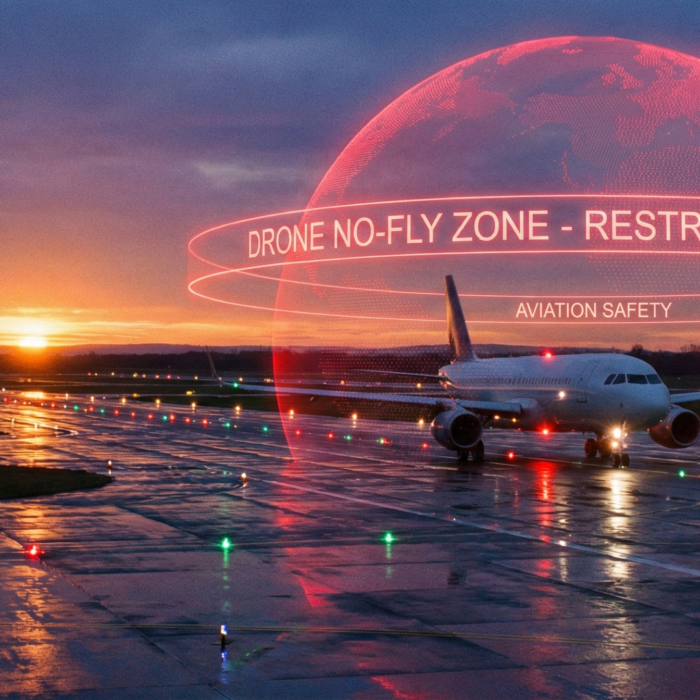
Before deploying a Mini VTOL UAV, operators must account for airspace regulations, especially for BVLOS missions. Compliance with local aviation authorities, geofencing, remote identification, and fail-safe mechanisms is critical.
Additionally, training requirements differ from multirotor drones due to transition flight phases. Buyers should ensure adequate operator readiness and system documentation.
A structured evaluation approach helps reduce long-term operational risk:
Match endurance and range to mission profiles
Verify payload integration and data compatibility
Assess ease of transport and field assembly
Review maintenance requirements and component redundancy
For organizations aiming to buy mini VTOL drone systems at scale, lifecycle support and system reliability are often more important than raw specifications.
Mini VTOL drones are evolving rapidly, with improvements in battery energy density, lightweight composites, and onboard AI. Future platforms are expected to deliver greater autonomy, improved sense-and-avoid capabilities, and tighter integration with command-and-control systems.
As adoption increases across civil and defense domains, the mini VTOL category is becoming a standard rather than a niche.



Reviews
There are no reviews yet