
FPV Drone Battery Guide 2025 – Best 4S & 6S LiPo Batteries for FPV Drones
Choosing the right FPV Drone Battery is one of the most important decisions for any FPV pilot, whether you fly freestyle, racing, cinematic, or long-range. In 2025, battery performance directly affects throttle response, flight time, sag levels, and overall drone reliability. This guide breaks down everything you need to know—battery types, mAh, C-rating, voltage, connectors, safety practices, and a comparison of the best 4S and 6S LiPo batteries designed for FPV drones. Check out our FPV Drone battery collection here.
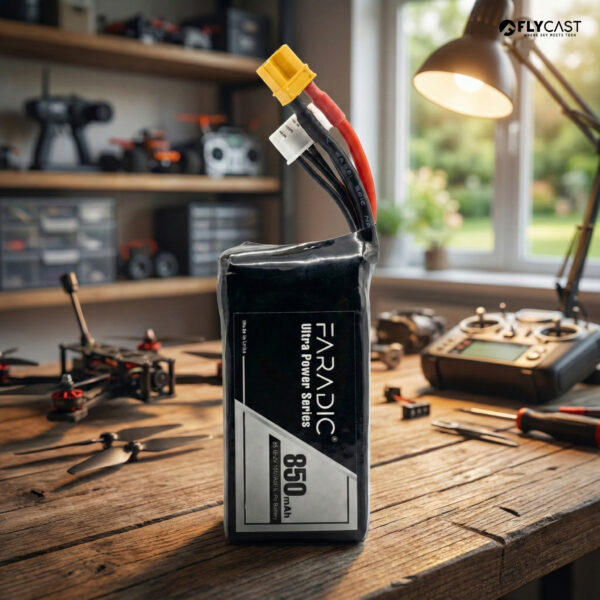
Understanding FPV Drone Battery Basics
An FPV Drone Battery is typically a LiPo (Lithium Polymer) battery engineered to deliver high discharge rates required for aggressive maneuvers, racing bursts, or long-range cruising. FPV drones demand instant power delivery, and therefore choosing the right battery specification is critical. Explore our home-grown battery, engineered and launched after extensive research and development to deliver superior performance and reliability.
Battery Voltage (S Rating): 4S vs 6S Explained
4S LiPo (14.8V)
- Popular for freestyle
- Smooth power delivery
- Ideal for 5-inch drones
- Balanced speed + control
6S LiPo (22.2V)
- Preferred for racing
- Higher efficiency
- Less voltage sag
- Sharper throttle response
Comparison Table: 4S vs 6S FPV Drone Batteries
| Feature | 4S LiPo Battery | 6S LiPo Battery |
|---|---|---|
| Voltage | 14.8V | 22.2V |
| Ideal Use | Freestyle | Racing / Long Range |
| Motor KV | 2300–2500KV | 1600–1900KV |
| Flight Time | Moderate | Longer & more efficient |
| Throttle Feel | Smooth | Sharp & responsive |
| Battery Price | Lower | Higher |
FPV Drone Battery Specifications You Must Understand
1. mAh (Capacity)
Capacity affects flight time.
- 650–850 mAh → 3″ drones
- 1300–1550 mAh → most 5″ drones
- 2200–3000 mAh → long-range setups
2. C-Rating (Discharge Rate)
Higher C-rating = more power, less sag.
Choose 75C to 120C for best performance.
3. Cells (S Count)
More cells increase voltage, efficiency, and throttle power.
4. Connectors
Common connectors in FPV drones:
- XT60 (5–7 inch drones)
- XT30 (small drones & tiny whoops)
5. Weight
Heavier batteries give longer flights but reduce agility.
Best FPV Drone Battery Options for 2025
Below are the most reliable FPV drone batteries used by pilots worldwide:
Faradic 4S 850mAh
High punch, excellent build quality.
FARADIC 1300 mAh 4S
Strong discharge and budget-friendly.
FARADIC 5200mAh 4S
Lightweight, good cycle life.
FARADIC 1500mAh 22.2V 6S
Cooler running and consistent performance.
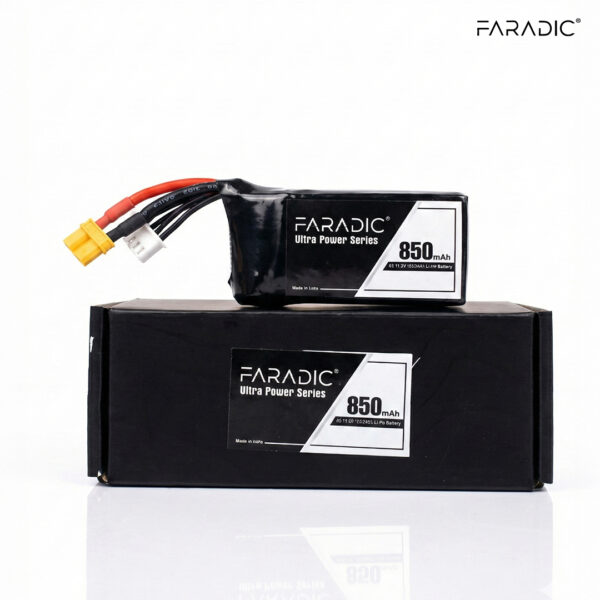
Table: Recommended FPV Batteries by Drone Type
| Drone Type | Ideal Battery |
|---|---|
| 5″ Freestyle | 4S/6S 1300–1550 mAh |
| 5″ Racing | 6S 1000–1300 mAh High C |
| 7″ Long Range | 6S 2200–4000 mAh |
| Cinewhoop | 4S 850–1300 mAh |
| Tiny Whoop | 1S 300–450 mAh |
How to Choose the Right FPV Drone Battery
Choosing the best FPV Drone Battery depends on your motor KV, prop size, and flying style.
✔ Motor KV
- High KV → 4S
- Low KV → 6S
✔ Propeller Size
- 3-inch → 3S/4S
- 5-inch → 4S/6S
- 7-inch → 6S
✔ Flight Style
- Freestyle → 1300–1500 mAh
- Racing → 6S high C
- Long range → high mAh 6S
LiPo Battery Safety Guide for FPV Drones | Charging, Storage & Care” — comprehensive safety & maintenance guidelines for LiPo batteries used in FPVs.
FPV Battery Safety & Maintenance
1. Charge With a Balance Charger Only
Avoid fast charging above safe levels.
2. Store at 3.8V per Cell
Prevents puffing and extends lifespan.
3. Inspect Before Every Flight
Do not use swollen or damaged batteries.
4. Use a LiPo Safe Bag
Reduces fire hazards during charging and transport.
Frequently Asked Questions
What is the best FPV drone battery for a 5-inch quad?
A 4S 1550mAh or 6S 1300mAh high C LiPo is the most suitable.
How long does an FPV Drone Battery last?
Typical flight time ranges from 3 to 12 minutes depending on size and style.
Why does my FPV Drone Battery swell?
Swelling happens due to overcharging, overheating, or over-discharging.
Which is better: 4S or 6S?
6S gives more efficiency and less sag, while 4S provides smoother freestyle control.
How many cycles does an FPV Drone Battery last?
With proper care, LiPo batteries last 150–250 cycles.
Can I use a different S rating than recommended?
No. Using the wrong S rating can damage ESCs, motors, and flight controllers.
What should I do if my FPV drone battery starts to swell?
If your FPV drone battery shows even minor swelling, follow these steps:
- Stop using it immediately – do NOT fly.
- Place it in a fireproof LiPo-safe bag to prevent accidents.
- Do not puncture, press, or squeeze the swollen area.
- Let the battery cool down if it is hot.
- Dispose of it safely at an e-waste or battery recycling center.
Do not store a swollen LiPo inside your house. Always handle it as a potential fire risk.
Can I still use a slightly swollen FPV drone battery?
No. Even slight puffing indicates internal cell damage.
Flying with a swollen FPV drone battery increases the risk of:
- Mid-air fire
- Sudden voltage drop
- Drone crash
- Permanent ESC or FC damage
If you’re unsure whether swelling is “slight” or severe, treat it as unsafe and retire the battery.
How can I prevent FPV drone batteries from swelling?
o avoid swelling your FPV drone battery:
- Never over-discharge (keep above 3.5V per cell under load).
- Do not overcharge beyond 4.2V per cell.
- Avoid flying when the battery is hot or during high temperatures.
- Use balanced charging only.
- Store at 3.8V per cell (storage voltage).
- Avoid pushing full throttle constantly for long durations.
- Choose good-quality LiPo brands.
Following these habits significantly increases FPV battery life.
Why does my FPV drone battery swell after only a few flights?
Early swelling generally indicates one of these issues:
- You discharged the battery too low
- Your charger is overcharging a cell
- The LiPo has poor build quality
- You flew aggressively in hot weather
- One of the cells is defective
Check your charger settings and battery IR (internal resistance). Bad cells usually show higher IR.
Can FPV drone battery swelling be reversed?
Swelling means permanent chemical damage inside the LiPo.
There is no safe method to fix or “un-puff” a battery.
Do not try to vent, puncture, freeze, compress, or repair it—this is extremely dangerous.
The only safe option is proper disposal.
Why does my FPV drone battery get hot during flight?
FPV batteries heat up due to:
- High throttle usage
- High C-load demand
- Low-quality LiPo cells
- Aggressive freestyle maneuvers
- Flying with a partially charged battery
- Poor airflow around the battery
A hotter battery ages faster and is more likely to swell.
How do I store FPV drone batteries safely?
Follow these storage rules:
- Keep them at storage voltage (3.7–3.85V per cell)
- Store inside a LiPo-safe bag
- Keep them in a cool, dry place (not in a car, not in sunlight)
- Avoid storing fully charged or fully discharged batteries
- Check cell balance every 2–3 weeks
Proper storage extends battery lifespan dramatically.