
Agriculture Drones in Satara – Fast, Affordable & Reliable Spraying
The agricultural community of Satara is rapidly adopting new technologies, and among them, the Agriculture Drone in Satara has become one of the most effective tools for modern farming. Farmers cultivating sugarcane, soybean, pomegranate, grapes, vegetables, and floriculture crops face common challenges—labour shortage, increased pest attacks, rising pesticide prices, and the pressure to cover large fields quickly. Check the Agriculture Drone FAQ section
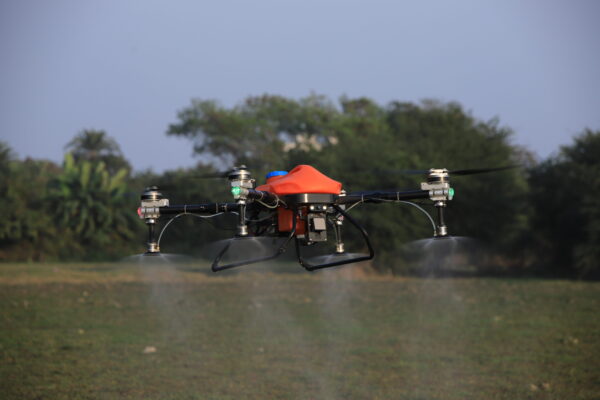
Agriculture drones in Satara directly solve these challenges by ensuring fast spraying, uniform coverage, reduced chemical usage, and safe operation. Whether a farmer owns 1 acre or 50 acres, drone spraying makes day-to-day operations smoother and more profitable.
Fill the Form to Get ₹ Pricing, Demo & Subsidy Guidance
In Satara’s agricultural hubs like Karad, Koregaon, Phaltan, Wai, Patan, and Khandala, drones are steadily becoming the preferred choice due to their efficiency and adaptability.
Here is the information regarding namo drone didi.
How Agriculture Drones Transform Farming in Satara
The Agriculture Drone in Satara brings automation to spraying activities, drastically reducing the time and cost involved. These drones can spray pesticides, fertilizers, plant growth regulators, and micronutrients with high precision—ensuring that every part of the field is covered uniformly.
Farmers growing pomegranate in Koregaon, sugarcane in Karad, soybean in Phaltan, or vegetables in Wai can benefit immensely from the accuracy and speed of drones.
Key Advantages for Satara Farmers
- Complete 1 acre in just 5–7 minutes
- No dependency on farm workers
- Consistent droplet size for better pest and disease control
- Saves 20–30% on chemicals
- Easy to fly and requires no prior technical background
- Ideal for heavy-acreage crops like sugarcane
- Works exceptionally well in hilly areas like Mahabaleshwar & Wai where manual spraying is difficult
Comparison: Manual Spraying vs. Drone Spraying
| Parameter | Manual Spraying | Drone Spraying | Benefit for Satara Farmers |
|---|---|---|---|
| Speed | 1–2 acres/day | 10–25 acres/day | Saves time during peak pest season |
| Labour Cost | ₹600–₹1,200/day | Only 1 operator needed | Major labour cost reduction |
| Chemical Efficiency | High wastage | Precise application | 20–30% chemical savings |
| Human Safety | High chemical exposure | Zero exposure | Better health for workers |
| Spray Uniformity | Uneven coverage | Perfect height & pressure | Healthier crops |
| Water Requirement | 150–200L/acre | 8–10L/acre | Huge water savings |
| Dependence on Labour | Very high | Very low | No stress during labour shortages |
| Cost Per Acre | ₹500–₹1,000 | ₹100–₹300 | Direct savings |
| Overall Profitability | Low | High | Higher income for farmers |
This table clearly proves how adopting the Agriculture Drone in Satara can help farmers save money and improve crop productivity.
10L, 16L, 22L Agriculture Drones in Satara– What Farmers Should Choose
Flycast provides multiple drone options suitable for different farm sizes and crops in Satara. Each model offers unique advantages:
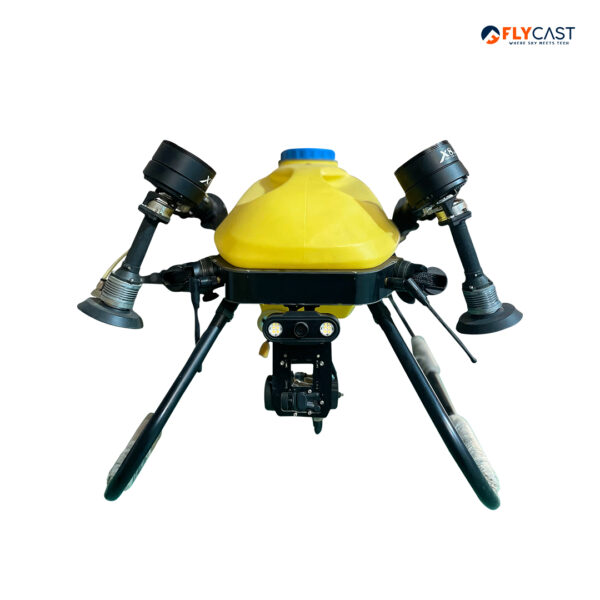
1. 10L Agriculture Spraying Drone
Ideal for: Small farmers (1–10 acres), vegetables, soybean, floriculture
The 10L agriculture drone is a compact, efficient, and easy-to-operate model.
Features:
- Sprays 1 acre in 7 minutes
- Lightweight and highly stable
- Very low battery consumption
- Perfect for small to medium-sized farms
- Affordable and beginner-friendly
This model is popular among farmers in Wai, Karad rural, Koregaon, and Patan who have smaller fields or orchards.
2. 16L Agriculture Spraying Drone
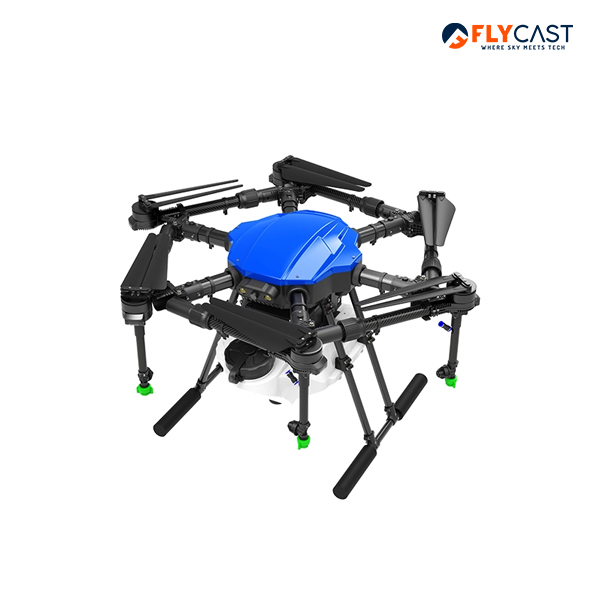
Ideal for: Medium to large farmers (10–30 acres), pomegranate, sugarcane
The 16L drone offers a balance of payload and efficiency.
Features:
- Sprays 1 acre in 5–6 minutes
- Higher tank capacity means fewer refills
- Excellent for orchards with dense canopy
- Suitable for long working days
- Powerful pump system for consistent droplet size
Farmers growing pomegranate in Koregaon and grapes in Wai/Jaoli prefer this model for its coverage and accuracy.
3. 20L Agriculture Spraying Drone (Heavy-Duty)
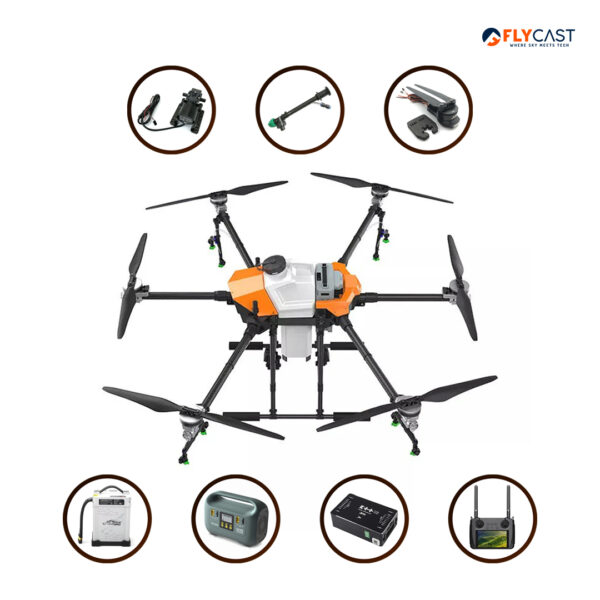
Ideal for: Commercial farms, contractors, and large sugarcane growers
The 22L drone is a powerful machine built for extensive spraying operations. One of the most popular agriculture drone when it comes to talking about Agriculture Drones in Satara
Features:
- Covers 20–25 acres per day
- Designed for large sugarcane and soybean fields
- Heavy-load frames and advanced motors
- Best choice for service providers, cooperatives & large dairy farms
This is the most preferred model by large-acreage farmers in Karad, Phaltan, and Satara outskirts.
Why Choose Flycast for Agriculture Drones in Satara
Flycast is a trusted partner for farmers across Maharashtra. We offer reliable products, complete training, and strong customer support.
What Makes Flycast the Best Choice:
- ✔ A wide range of 10L, 16L, and 22L agriculture drones
- ✔ Complete remote demo and technical explanation
- ✔ Full training support – operation, safety & maintenance
- ✔ Fast delivery to Satara, Karad, Wai, Phaltan, Koregaon
- ✔ Customer base across Maharashtra
- ✔ Easy availability of spare parts & batteries
- ✔ Assistance with subsidy documentation
- ✔ Affordable pricing with strong performance
- ✔ Dedicated WhatsApp and call support
- ✔ Reliable drones suitable for strong Maharashtra winds and uneven fields
Call to Action
Upgrade to modern farming today and reduce your spraying costs quickly.
Contact Flycast for Agriculture Drones in Satara
(Insert your WhatsApp button or Contact Form here)
Conclusion
The future of farming in Satara is shifting towards automation, and agriculture drones in Satara are leading this change. From sugarcane in Karad to pomegranate in Koregaon, farmers are witnessing faster spraying, lower costs, and improved crop health with drone technology.
Whether you need a 10L drone for small fields, a 16L drone for orchards, or a 22L drone for large farms, Flycast delivers the right solution along with complete support.
If you want better yield, lower expenses, and safer spraying, now is the right time to adopt an Agriculture Drone in Satara.
Reach out today via WhatsApp or phone—Flycast is always ready to support farmers across Maharashtra.
How do drones cut costs on Satara farms?
Drones reduce manual labour for spraying and monitoring, lower pesticide/fertiliser use through precise application, and speed operations — all of which reduce per-acre costs.
Can drones actually increase crop yield here?
Yes — faster, targeted spraying and timely detection of stress/pests help farmers act sooner, which commonly improves yield when paired with proper agronomy.
Are drones suitable for small, fragmented fields common in Satara?
Many agricultural drones are effective on small plots; choose smaller payload drones and plan flight paths to avoid frequent takeoffs/landings.
What about weather & monsoon limits in Satara?
Heavy rain and strong winds reduce drone effectiveness — schedule spraying outside heavy monsoon windows and use weather forecasts for safe operation.
How quickly will I recover the drone investment (ROI)?
ROI depends on crop, farm size and usage frequency — common savings from labour, chemicals and increased yield often show ROI within 1–3 seasons for medium-use scenarios.
Do I need permissions, training, or subsidies in Satara?
You should check local/state agri extension for any subsidies, and ensure pilots are trained/certified for safe operation; many vendors offer training and after-sales support.