
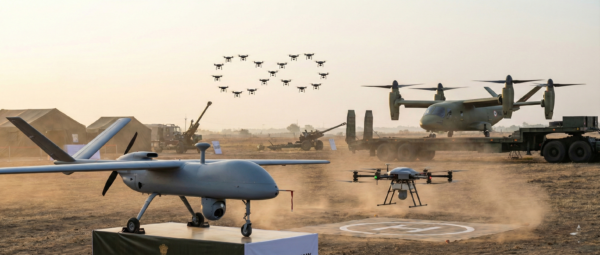
Unmanned Aerial Vehicles (UAVs) have become indispensable to modern land warfare, and the Indian Army is no exception. From real-time intelligence gathering to precision strike missions and high-altitude logistics support, drones now play a central role across operational domains. As India continues its defence modernization efforts, understanding the Indian Army drone price structure in 2025 provides valuable insight into procurement priorities, capability development, and long-term strategic planning. If you’d like to explore the various drones operated by the Indian Army, click here for a detailed overview.
Rather than relying on a single class of UAV, the Indian Army operates a layered drone ecosystem. Each category—surveillance, combat, and logistics—serves a specific mission profile and carries a distinct cost structure aligned with its operational value.
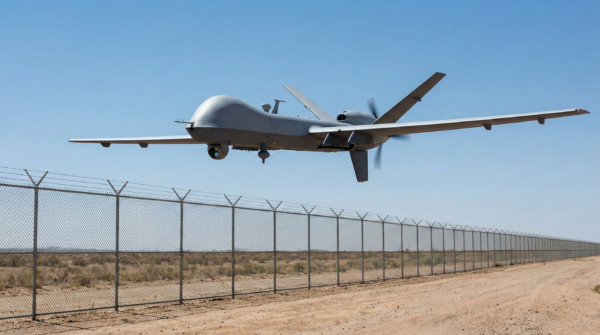
Drone acquisition in 2025 is shaped by a balance between indigenous development and selective imports. Procurement decisions increasingly focus on lifecycle costs, scalability, and interoperability rather than upfront acquisition alone. As a result, the Indian Army drone price varies widely depending on role, payload complexity, and endurance requirements.
Budget planning also accounts for training, maintenance, secure communication systems, and upgrade pathways, making UAV investments part of a broader capability ecosystem rather than standalone assets. Here is Flycast’s VTOL drone, designed for efficient vertical takeoff and landing operations. Here is the link to the official website detailing UAVs owned by the Indian government.
Surveillance drones form the largest segment of the Army’s UAV inventory. These platforms support intelligence, surveillance, and reconnaissance (ISR) missions along borders, in counter-insurgency operations, and during peacetime monitoring. Their value lies in persistence, rapid deployment, and reduced risk to personnel.
In 2025, the Indian Army drone price for surveillance platforms spans a wide range based on size, endurance, and sensor quality:
Lower-cost systems are used extensively at the unit level, while higher-end platforms support sector and command-level intelligence requirements.
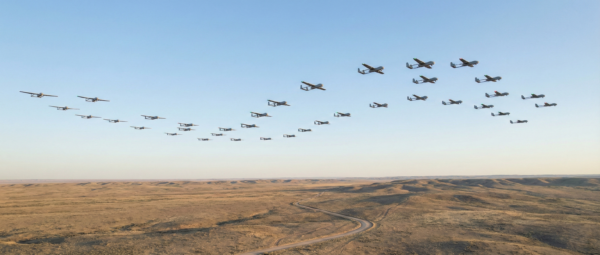
Combat UAVs significantly enhance the Army’s ability to conduct precision strikes while minimizing exposure of ground forces. These drones are designed for high-threat environments and are increasingly integrated with joint-service command and control networks.
Combat UAVs represent the most capital-intensive category. The Indian Army drone price for armed platforms reflects advanced avionics, weapon integration, satellite communication, and survivability features:
Although fleet numbers remain limited, their strategic value and deterrence effect justify the higher cost profile.
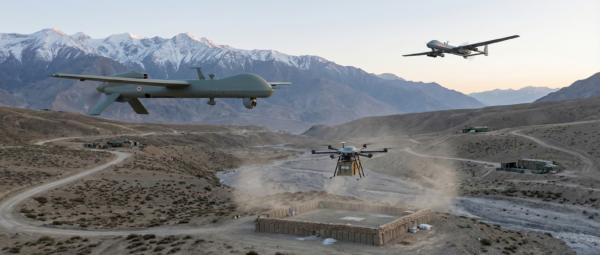
Logistics drones are transforming resupply operations, particularly in mountainous and remote regions where conventional transport is slow or risky. These UAVs enable last-mile delivery of ammunition, medical supplies, and essential equipment.
The Indian Army drone price for logistics UAVs depends primarily on payload capacity and flight stability:
Over their service life, logistics drones are increasingly viewed as cost-effective alternatives to manned sorties in challenging terrain.
| Drone Type | Primary Role | Estimated Unit Cost | Key Capabilities | Strategic Importance |
|---|---|---|---|---|
| Surveillance UAV | ISR & border monitoring | ₹15 lakh – ₹8 crore | EO/IR sensors, long endurance | Situational awareness |
| Combat UAV | Precision strike | ₹50 crore – ₹200+ crore | Weapons, SATCOM, autonomy | Strategic deterrence |
| Logistics UAV | Cargo & resupply | ₹1 crore – ₹25 crore | VTOL, payload delivery | Operational sustainment |
This comparison highlights how the Indian Army drone price scales with mission complexity and strategic value.
The Indian Army drone budget and pricing framework in 2025 emphasizes capability-driven investment. Rather than mass procurement, the focus is on platforms that can be upgraded modularly and sustained domestically.
Key trends include:
These measures help stabilize the Indian Army drone price over time while ensuring operational readiness.
Drone investments strengthen the Army’s ability to operate across diverse terrains and threat environments. Beyond immediate tactical benefits, UAVs support long-term objectives such as technological self-reliance, joint-force integration, and faster decision-making cycles. The structured evolution of the Indian Army drone price reflects a balance between fiscal discipline and strategic necessity.
Prices vary widely, from ₹15 lakh for mini drones to over ₹200 crore for advanced combat UAVs.
They integrate weapons, secure communications, and advanced autonomy systems.
Yes, surveillance UAVs form the largest portion of the fleet due to their versatility.
It reduces long-term costs and improves supply chain resilience.
Yes, especially in high-altitude and remote operations.
Exact figures are rarely public; estimates are based on procurement data.
Budgeting ensures alignment with modernization priorities and lifecycle costs.
Generally yes, due to licensing, support, and integration costs.
Modular upgrades are increasingly preferred over full replacement.V
Costs may gradually stabilize as domestic production matures.